
Blog
Easter Sensory Activities & Easter Playdough Activities for Toddlers

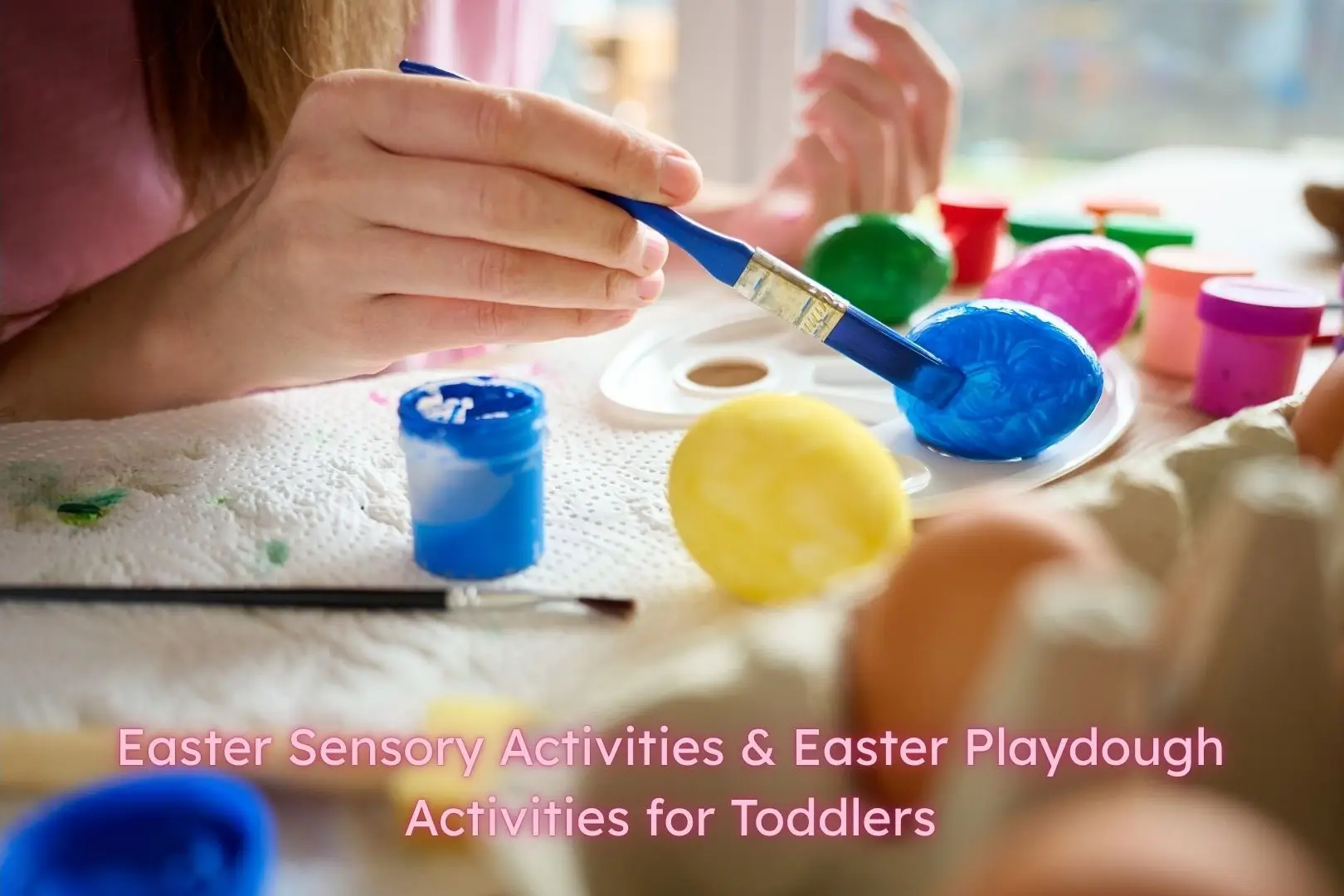
Easter is one of the most colorful, tactile and texture-rich holidays of the year, which makes it an absolutely perfect time to introduce hands-on sensory play for toddlers. From squishy playdough bunnies to hidden-egg sensory bins overflowing with rice and spring-themed sensory toys, Easter sensory activities turn holiday fun into meaningful developmental play.
Sensory play helps toddlers build fine motor skills, expand their vocabulary, regulate their emotions and discover the world through touch and exploration. And the best part? You don’t need to be a crafting expert or spend hours on Pinterest to pull it off. With the right tools, fillers and a little seasonal inspiration, you can create Easter toddler activities they’ll want to come back to again and again.
We cover everything from Easter sensory bin ideas to Easter playdough activities, sensory table setups, Easter-themed crafts and sensory Easter eggs. Let’s dig in!
Why Sensory Play Is Perfect for Easter
Before we jump into the activities, it’s worth understanding why sensory play and Easter are such a natural pairing. The holiday is already full of sensory-rich elements, bright colors, varied textures, the crinkle of Easter grass, the smooth coolness of a plastic egg, the softness of a toy chick. Channeling all of that into intentional sensory play amplifies the benefits.
Here’s what regular sensory play does for toddlers:
- Encourages natural curiosity and a love of exploration
- Supports fine motor development through scooping, pouring, pinching and squeezing
- Helps children regulate their emotions. Sensory input is naturally calming and grounding
- Builds early learning skills like color recognition, sorting, counting and cause-and-effect
- Develops language as toddlers describe what they feel, see and discover
Seasonal sensory activities make holidays more interactive and memorable for young children. When play is themed around something familiar and exciting, like Easter bunnies, colorful eggs and spring flowers, toddlers are more motivated to engage and explore.
Easter Sensory Bin Ideas Toddlers Love
A sensory bin is exactly what it sounds like: a container filled with a base material and themed items for children to explore with their hands. Sensory bins are endlessly adaptable, easy to set up and can keep toddlers happily engaged for 20–40 minutes at a stretch. Here are some of the best Easter sensory bin ideas to try this spring.
Simple Easter Sensory Bin Setup
If you’re new to sensory bins, start here. All you need is:
- A wide, shallow bin or storage container
- A filler material. So, dyed rice, dried beans, kinetic sand or Easter grass
- Scoops, cups, spoons and small tongs
- Easter-themed toys: plastic eggs, mini bunnies, chicks or small spring figurines
Pre-made sensory fillers, tools and Easter-themed toys from Sensory-N-Stuff make setup incredibly fast and easy. So, no food coloring or DIY prep required. Just pour, play and let your toddler explore.
Bunny Garden Sensory Bin
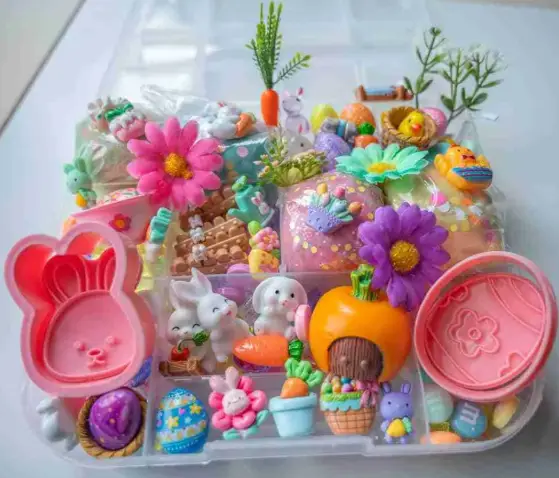
This bin is all about digging and sorting in a pretend garden setting. Fill your bin with green sensory rice or shredded paper “grass,” then add:
- Mini plastic carrots
- Soft or rubber bunny toys
- Scoops and tongs for transferring
- Small pots or cups for sorting
Toddlers can “pick” carrots for the bunnies, sort items by type or color, and practice using tongs to develop that all-important pincer grip. Simple, engaging and absolutely adorable.
Easter Egg Sensory Bin
What’s Easter without eggs? This bin focuses on the magic of discovery. It’s always a hit with toddlers. Fill a bin with colorful filler (pastel rice or confetti filler works beautifully) and bury plastic eggs throughout. Inside some eggs, tuck small surprise toys, sensory items or stickers.
The joy of finding a hidden egg, cracking it open and discovering what’s inside is incredibly satisfying for little ones. It builds anticipation, fine motor control (those egg snaps take real effort!) and excitement that keeps toddlers coming back for more.
Spring Chick Sensory Bin
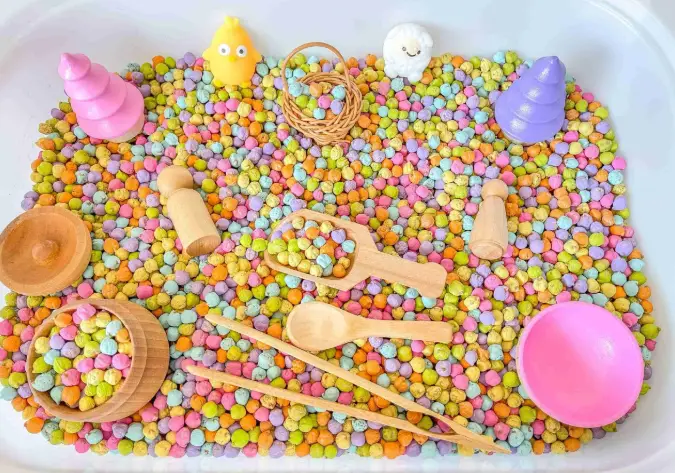
This cheerful bin is perfect for color recognition and early pretend play. Set it up with:
- Yellow sensory fillers.That means yellow rice, yellow pom-poms or yellow Easter grass
- Small rubber or plush chick toys
- Small nests made from brown shredded paper or natural materials
- Sorting cups in different colors
Encourage toddlers to “nest” the chicks, sort them by size or count them into cups. This bin naturally sparks imaginative play and early math concepts without any formal instruction.
Easter Playdough Activities for Toddlers
If there’s one sensory material that never gets old for toddlers, it’s playdough. Soft, pliable and endlessly moldable, playdough provides rich tactile input that is naturally calming and deeply engaging. Easter playdough activities add a seasonal layer of fun that makes the experience feel special and new.
The benefits of playdough play for toddlers include:
- Strengthening the small muscles in hands and fingers. essential for future writing skills
- Encouraging creative thinking and imagination
- Providing calming, repetitive sensory input through squeezing, rolling and pressing
- Building vocabulary as children describe what they’re creating
Add playdough tools, stamps, rollers and Easter-themed accessories to make the activity even more engaging. Here are three Easter playdough activities your toddler will love.
Build an Easter Bunny
This open-ended activity invites toddlers to create their very own Easter bunny using playdough. Show them how to:
- Roll dough into a round body and smaller head
- Pinch and pull long ears from a ball of dough
- Add a small tail using a pom-pom or rolled dough ball
- Decorate their bunny with beads, googly eyes or small sensory accessories
There’s no “right” way to build a bunny, and that’s the beauty of it. This activity celebrates creativity and imagination while providing hours of tactile sensory input.
Easter Egg Playdough Decorating
Use egg-shaped cookie cutters to stamp out dough eggs, then encourage toddlers to decorate them. Ideas include:
- Pressing textured stamps or rollers into the surface to create patterns
- Adding small beads, sequins or pom-poms for color and texture
- Using toothpicks or sculpting tools to draw designs
- Layering different colored doughs for a tie-dye effect
This is one of those sensory crafts for toddlers that bridges art and sensory play beautifully. The eggs can even be displayed as “decorations” before being smooshed back into a ball, which is honestly just as much fun.
Carrot Patch Playdough Garden
Create a pretend carrot patch using orange and green playdough. Toddlers can:
- Roll orange dough into carrot shapes (cone or cylinder)
- Press green strands or use a garlic press to create carrot tops
- “Plant” their carrots by pressing them into a base of dough, or even into a pot of kinetic sand
- Practice pretend-play “harvesting” and replanting their garden
This activity is wonderful for imaginative play and introduces early concepts about nature and growing food in a hands-on, tactile way.
Set Up an Easter Sensory Table
If you work in a childcare setting, preschool or have multiple kids at home, an Easter sensory table is a fantastic option. A sensory table is simply a raised bin or water table that allows multiple children to explore together, side by side. It encourages cooperative play, turn-taking and shared discovery.
Here are some great Easter sensory table setups:
- Sensory rice with buried eggs and scoops. They’re a classic setup that never fails
- A water table with floating plastic eggs. So, add food coloring for extra visual excitement
- Mixed textures: pom-poms, Easter grass filler and plastic eggs all in one table for maximum tactile variety
- A kinetic sand table with egg molds, bunny-shaped stampers and spring figurines
Sensory tools, scoops, tongs and themed toys from Sensory-N-Stuff help keep kids engaged and exploring longer. Having a variety of tools available also extends the learning value of the activity, encouraging children to experiment with different ways of moving, sorting and transferring materials.
Sensory Crafts for Toddlers with an Easter Theme
Sensory crafts combine the creativity of art with the tactile richness of hands-on materials, making them perfect for toddlers who learn best through touch and exploration. These Easter-themed sensory crafts are simple enough for little hands but engaging enough to hold attention.
Cotton Ball Bunny Craft
Give toddlers a bunny outline on cardstock and a bowl of cotton balls. Let them glue cotton balls onto the bunny to create a fluffy texture. Add googly eyes, a pom-pom nose and paper ears for a finished piece they’ll be proud of.
Pom-Pom Chick Craft
Using yellow pom-poms as the base, toddlers can build a spring chick on paper or cardboard. Add an orange triangle beak, googly eyes and small feather stickers. The varied textures of pom-poms, paper and stickers make this a genuinely multi-sensory craft experience.
Easter Egg Texture Collage
Cut large egg shapes from cardstock and fill a tray with materials of different textures: fabric scraps, bubble wrap, sandpaper, smooth foil, soft felt and bumpy corrugated cardboard. Let toddlers choose which textures to glue onto their egg for a one-of-a-kind collage that doubles as a tactile exploration activity.
Sticker Egg Decorating
This ultra-simple activity is perfect for very young toddlers. Give them a paper or plastic egg and a sheet of colorful stickers. So, dots, stars, flowers or Easter-themed designs. Peeling and placing stickers builds fine motor skills and gives toddlers a beautiful sense of accomplishment when their egg is complete.
Combining craft materials with sensory tools and textured items adds another layer of exploration, turning simple crafts into rich, multi-sensory experiences.
Sensory Easter Eggs: A Fun Surprise Activity
Sensory Easter eggs are one of the most creative and versatile Easter activities for toddlers, and they’re incredibly easy to put together. Instead of filling plastic eggs with candy, you fill them with small sensory toys that encourage hands-on exploration.
Great sensory Easter egg fillers include:
- Mini fidget toys and pop-its
- Squishy toys in Easter shapes
- Stretchy toys or rubber fidgets
- Small textured balls
- Mini containers of putty or slime
- Soft pom-poms or fabric pieces
- Small rubber animals or spring figurines
The magic of sensory Easter eggs is that they extend play well beyond the egg hunt itself. Once the hunt is over, toddlers have a collection of sensory tools they can explore, squeeze, stretch and play with all day long. They’re also a great candy-free alternative for children with dietary restrictions or sensory sensitivities around sweet foods.
Easy Easter Toddler Activities That Encourage Sensory Play
Not every Easter toddler activity needs to involve a full sensory bin setup. Here are some quick, low-prep sensory play ideas you can put together in minutes at home:
- Egg color sorting: Gather plastic eggs in multiple colors and have toddlers sort them into matching cups or baskets. Simple, educational and satisfying.
- Scoop and transfer sensory bin game: Set up two containers, one full of rice with buried eggs, one empty. Give your toddler a scoop and let them transfer the material from one bin to the other.
- Bunny hop movement game: Combine sensory play with gross motor activity by having toddlers “bunny hop” between egg markers on the floor.
- Egg matching activity: Write letters, numbers or draw simple shapes on the two halves of plastic eggs, then mix them up. Toddlers match the halves back together, a great early literacy and numeracy activity.
- Sensory egg shaking game: Fill eggs with different materials like rice, bells, beads, sand and have toddlers shake them and describe the sound. Which is loudest? Quietest? This builds auditory discrimination skills.
These activities are proof that great sensory play doesn’t require a lot of preparation. A few simple materials and some Easter-themed props are all you need.
Make Easter Play More Meaningful with Sensory Exploration
Sensory play isn’t just about keeping toddlers busy, it’s one of the most developmentally rich forms of play available to young children. Through touch, texture, color and discovery, toddlers build the foundational skills they need for language, learning and emotional regulation.
Seasonal activities like Easter sensory bins, playdough stations, sensory crafts and sensory Easter eggs keep children engaged while connecting play to something exciting and familiar. When the activity feels special (themed around bunnies, eggs and spring) toddlers are naturally more motivated to explore and create.
Using quality sensory toys, tools and fillers makes these activities easier to set up and more engaging for children. The right scoop, the right textured toy or the right bin filler can take a good sensory activity and make it a great one.
Shop Easter Sensory Supplies
Parents and educators can find sensory bins, fillers, tools, fidgets and Easter-themed sensory toys at Sensory-N-Stuff to create Easter activities toddlers will absolutely love. Make this spring the most hands-on, exploratory and joyful one yet.
Easter is a season built for sensory play. The colors, the textures, the themes of discovery and surprise, all of it translates beautifully into hands-on activities that toddlers can explore, create and delight in. Whether you set up a simple Easter sensory bin, roll out some Easter playdough or fill eggs with sensory surprises instead of candy, you’re giving your child something far more valuable than a sugar rush: you’re giving them rich, meaningful developmental play.
This spring, make Easter more hands-on, more exploratory and more magical for the toddlers in your life. They’ll remember the feeling of scooping rice for bunnies and squishing playdough carrots long after the chocolate has been forgotten.