
Blog
How to Make Oobleck: The Classic Sensory Science Experiment


Oobleck is a fun, messy, and fascinating sensory science activity for kids! This simple mixture behaves like both a liquid and a solid, making it the perfect blend for science exploration and sensory play. Classic Oobleck slime invites young children to squeeze, manipulate, and observe. In this blog post, you’ll learn how to make Oobleck and discover why this gooey substance has become a childhood favorite.
What is Oobleck?
What is Oobleck exactly? It’s a non-Newtonian fluid made from cornstarch and water. It’s also a super easy way to spark curiosity in young learners. When pressure is applied, Oobleck firms up and behaves like a solid. Once hands are completely relaxed and there is no more pressure, the Oobleck forms into a liquid. It’s exactly this type of behavior that makes kids wonder, “is Oobleck a solid or a liquid?”
Fun Facts about Oobleck
- Oobleck got its name from the Dr. Seuss book named Bartholomew and the Oobleck. In this book, a sticky green goo falls from the sky.
- If you were to put Oobleck on a speaker or subwoofer, the vibrations can make fun patterns and create dancing blobs.
- You can walk on it (at large scales)! Don’t stand still or move slowly though. Without the pressure of quick feet, you’ll sink right in.
Classic Recipe for Oobleck
The classic recipe for Oobleck is about as simple as it gets.
- Gather all your ingredients first: The recipe for Oobleck calls for cornstarch, water, and optional food coloring for visual appeal.
- Mix cornstarch and water together until the desired consistency has been reached.
This cornstarch and water experiment is easy to customize. Add a little more cornstarch to the mixture to thicken it up if it feels too runny. If it feels too thick, add a bit more water to it and stir again. Adding food coloring to the mix is a great way to liven it up or add your own seasonal touch to the Oobleck slime.
Oobleck is safe for kids to handle, manipulate and touch but it isn’t safe to eat. Although it’s made only from kitchen ingredients, ingesting heavy mixtures of cornstarch can cause an upset stomach. To make cleanup easier, scrape the remaining Oobleck into the trash can before washing the bowl. Adding a little warm water can help flush away any leftover residue.
Variations and Alternatives
There are many different variations to the classic Oobleck recipe. Here are some popular variations of Oobleck recipes that don’t contain cornstarch:
- Potato starch Oobleck: Mix potato starch and water together. Potato starch Oobleck has a grainier texture to it.
- Tapioca starch Oobleck: Mix tapioca and water together for a slightly stretchier feel.
- Baking soda and hair conditioner Oobleck: Mix 2 parts baking soda with 1 part hair conditioner for a soft, silkier texture.
- Arrowroot Powder Oobleck: Mix arrowroot powder and water using the same ratio as the classic cornstarch recipe for an extra silky variation of Oobleck.
Expert Home Tips shares how to make Oobleck without cornstarch three different ways in this article. If you use baby powder, make sure the powder is talc-free for safety.
Adding different colors and/or scents can make Oobleck visually appealing and sensorially engaging. Seasonal and holiday variations can be a great way to add excitement to your sensory science experiments.
Fun Seasonal and Holiday Tips for Making Oobleck
- Use orange or brown coloring and cinnamon and pumpkin scents for fall.
- Use light colors/pastels and floral scents for spring.
- Neon Oobleck slime is a great Halloween activity. Steam Powered Family shares an amazing glow in the dark Oobleck recipe here.
- Mix in themed add-ins like plastic spiders for Halloween and tiny flowers for spring.
- Match the season or holiday with different colored glitter: red for Valentine’s Day and Christmas, blue for winter, etc.
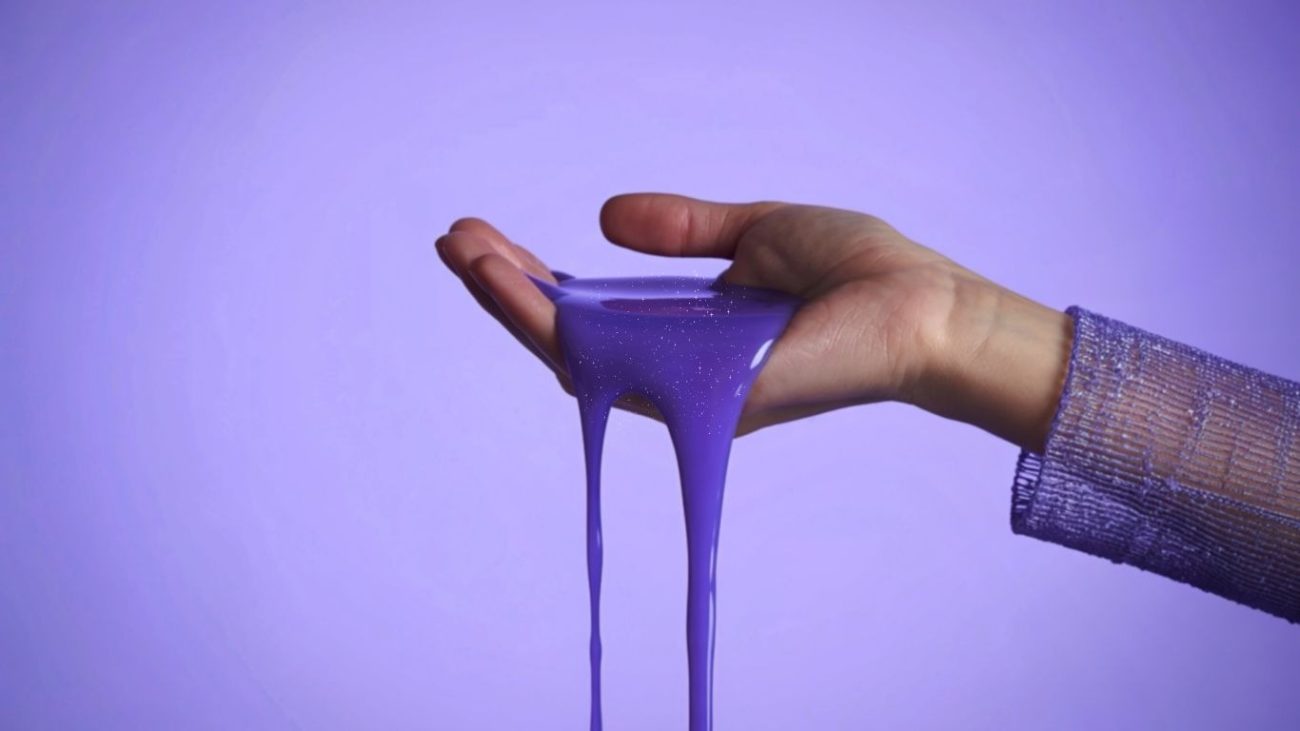
These simple changes transform basic Oobleck into a themed sensory experience, making it visually appealing and keeping kids engaged year-round.
Fun Experiments and Sensory Play Ideas
Oobleck opens the door to endless sensory play ideas and fun science experiments. One of the easiest experiments is demonstrating how it switches from solid to liquids. Have children punch or tap the Oobleck to see it harden to a solid, then scoop it up with relaxed hands and watch it turn to a runny, drippy liquid.
Another fun experiment is to pour the Oobleck from one container to another. Is the Oobleck transfer slower or faster than pouring just regular water? Encourage kids to punch, scoop, and pour the Oobleck or simply run their fingers through it. These simple activities help kids understand cause and effect while watching non-Newtonian fluids in action.
Combine Oobleck With Other Sensory Play Elements
- Set out scoops, spoons, bowls, or small plastic toys for messy, imaginative sensory play.
- Add themed objects and elements like glitter, confetti, gems, or plastic figurines for storytelling or exploration.
- Pretend to dig through “quicksand” by rescuing toys trapped under the Oobleck slime.
Safety and Edibility
Is Oobleck edible? As we mentioned above, although Oobleck is non-toxic, it’s still not safe to eat. Make sure kids know that Oobleck is for playing only, not eating. Here are a few more safety tips to keep in mind while playing with Oobleck:
- Encourage kids to wash their hands before and after playing.
- Keep the mixture away from the eyes to prevent any irritation.
- To control the mess, set up play in a shallow bin or tray and place a towel or mat underneath to catch any drips or spills.
- For easy clean up, scrape Oobleck into the garbage can instead of rinsing it down the drain.
- Wash hands and surfaces with warm water.
Educational Benefits of Oobleck
Creating and playing with Oobleck offers many different educational benefits for children. While kids manipulate the Oobleck slime, scoop and pour they are naturally building fine motor skills. Young children also learn early science concepts like viscosity and states of matter. Kids can learn directions and cause-and-effect when following the recipe for Oobleck and/or adjusting it to see what changes.
These activities support rich sensory learning, engaging touch, sight, and movement to strengthen understanding and curiosity. Most importantly, it encourages hands-on exploration and experimentation, giving children the opportunity to test different concepts and ideas, ask questions, and learn through playful discovery.
Oobleck is a must-try activity for kids because it combines messy, sensory play with educational learning, giving children a chance to explore science concepts, strengthen fine motor skills, and dive into hands-on sensory play all at once. It encourages open-ended play and helps kids to understand how different materials behave when manipulated. Finally, it provides a unique sensory experience that keeps kids entertained and engaged. Teach your kids how to make Oobleck and many fun sensory and science experiences are sure to follow. Try different variations at home or in the classroom today!
CHECK OUT OUR PRODUCTS FOR


