
Blog
Are Sensory Bins Good for Kids?

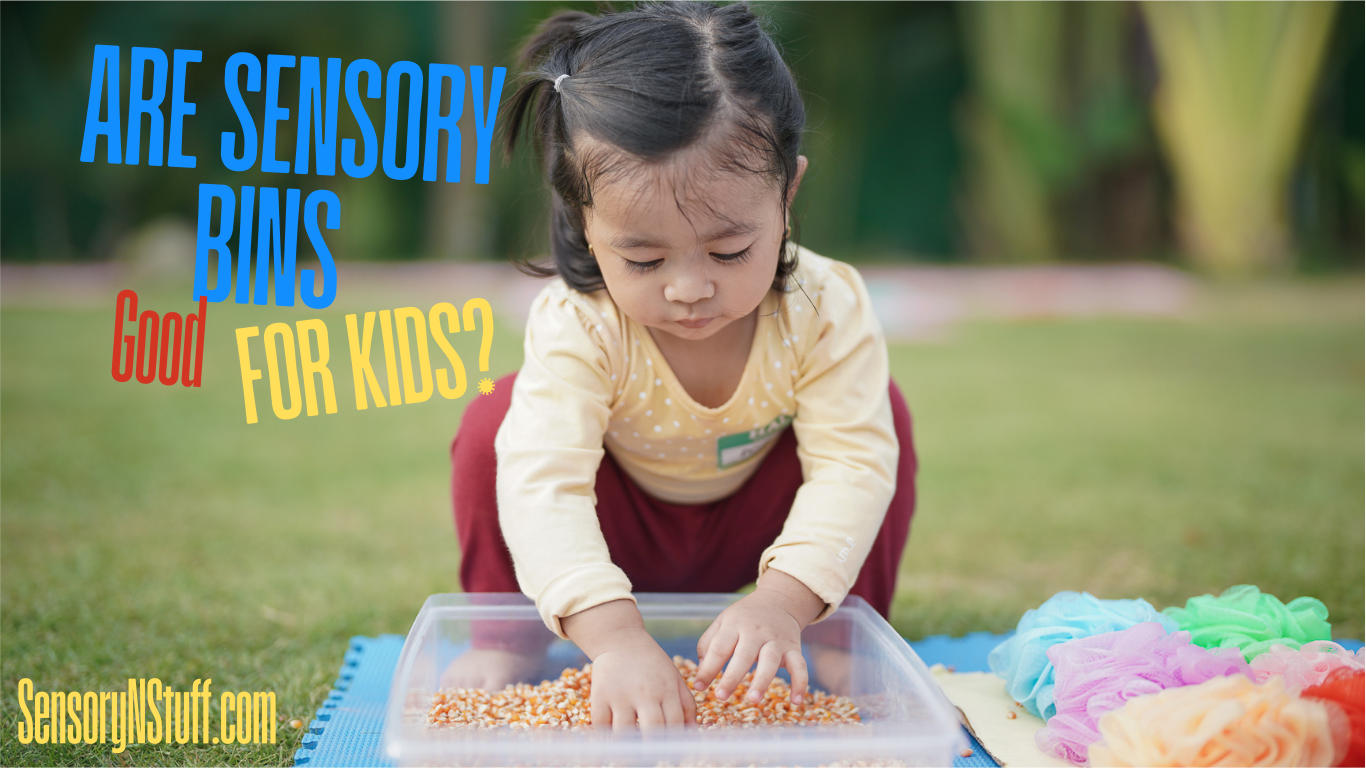
Imagine digging your hands into a bowl full of colored rice or beans. Running your hands through the rice and playing in sensory bins feels incredibly satisfying. You might be surprised to hear that sensory bins provide satisfaction and can fulfill a host of other development needs for your child, including motor skill and cognitive development. Sensory play, an activity that stimulates the child’s senses, also provides emotional benefits. You can see why sensory play can play a huge role in child development. Let’s explore a few of the benefits of sensory play and why sensory bins are good for kids.
What is a Sensory Bin?
What is a sensory bin? A sensory bin contains filler material and a variety of small objects. The filler material, such as rice, sand, beans, pasta, and small objects, is housed in a small, shallow container where children can scoop, dig, or maneuver the objects inside. Sensory bins allow children to stimulate their senses through tactile play. They’re a wonderful way to introduce sensory play by providing opportunities to see, hear, touch and smell different objects. They make a valuable tool for early childhood education.
What do you put in a Sensory Bin?
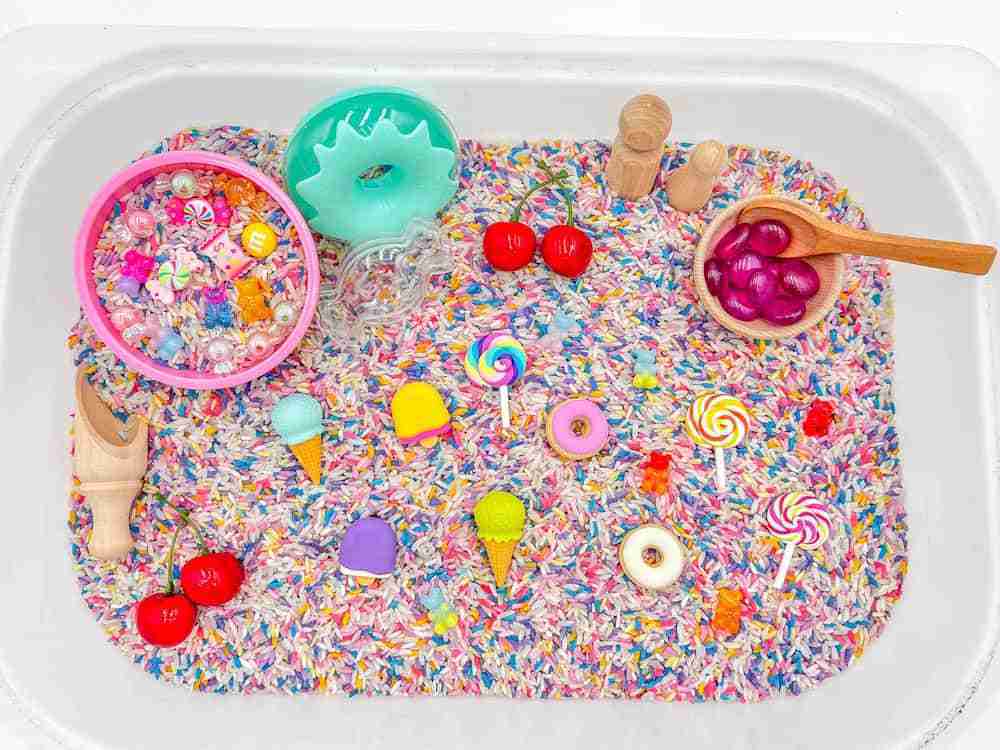
So what do you put in a sensory bin? Dry rice, sand, pasta, beans, popcorn (unpopped), and couscous make great sensory bin fillers. You can use a variety of small objects to complement the fillers, including tongs, bowls, scoops, balls, and other imaginative play items. The options are endless!
Another great benefit of sensory bins and sensory play is cognitive development. Sensory play prompts questions and sparks curiosity in little ones and furthers these skills. When a child engages in play with the different objects varying in size, shape, weight, and colors, they are learning to process sensory information, which is important for developing coordinated motor responses.
Tongs in particular, are an excellent way to use those hand-eye coordination skills. Using different colored bowls to sort colored gems is another great coordination skill. There are unlimited ways to develop these skills during sensory play.
What are the Benefits of Sensory Bins?
Sensory bins offer a way to improve problem-solving, language, and math skills and can even improve focus and attention in children. We offer a variety of different bins that provide opportunities for math and language skill development using numbers and letters. Sensory play helps support language development, encourages scientific thinking and helps children understand cause and effect.
What are the Developmental Benefits of Sensory Bins?
Sensory bins are a great way to improve fine and gross motor development. As your child scoops, digs and uses the tongs to pinch, grasp, and manipulate the various items in your sensory bin, he or she is using the small muscles in their hands and developing critical fine motor skills.
Sensory play promotes engagement through movement-based sensory activities. It encourages movement and exploration. When your child starts engaging their arm and shoulder muscles by digging and scooping in the rice and sand, they are developing gross motor skills as well. As children navigate these sensory bins, they are moving their whole bodies, working on their gross motor skills and developing upper body strength in the process.
If you want to take it a step further, you can enhance their gross motor skills by having them use the sensory bin from different positions such as lying down on their side or stomach or kneeling.
What are the Emotional Benefits of Sensory Bins?
Some emotional benefits to sensory play include stress relief, mindfulness, self-regulation, and freedom of expression. Sensory play can help reduce stress and anxiety by providing a relaxing, soothing way to relieve tension. It promotes mindfulness by reminding children to live in the moment and focus on the present. Children can build valuable self-regulation skills by learning to manage their emotions. The ability to express themselves in a non-verbal way is another great emotional benefit of sensory play.
Sensory play captivates kids’ attention and thus creates an environment to improve attention and focus for longer periods. It also encourages social interactions and cooperative play. When playing with other children, both kids learn valuable cooperation skills by sharing the sensory space and tools. This provides opportunities for children to collaborate, problem-solve, and communicate together in both verbal and non-verbal ways. This strengthens their social skills and teamwork abilities. It can also be used as a tool to develop empathy as they work with other children and learn to understand their emotional needs.
Imaginative play, discovery and exploration come to life during sensory play. Sensory play develops cognitive skills as it stimulates problem-solving and creativity, and impacts language development and critical thinking skills. It provides an environment to develop both fine motor and gross motor skills through scooping, pinching, and grasping and through movement-based sensory activities. Lastly, it provides many emotional and social benefits by providing a calming activity for stress relief and encouraging social interactions and cooperative play.
With so many benefits, it’s easy to see why sensory bins are great for kids! Grab your favorite fillers, tools, and sensory bin and let your kid get to work on developing those skills today. They make a great educational tool for parents and educators to incorporate sensory bins into playtime.
Explore Sensory-N-Stuff’s sensory bin kits for easy, engaging play today!