
Blog
How Often Should I Switch Sensory Bins?

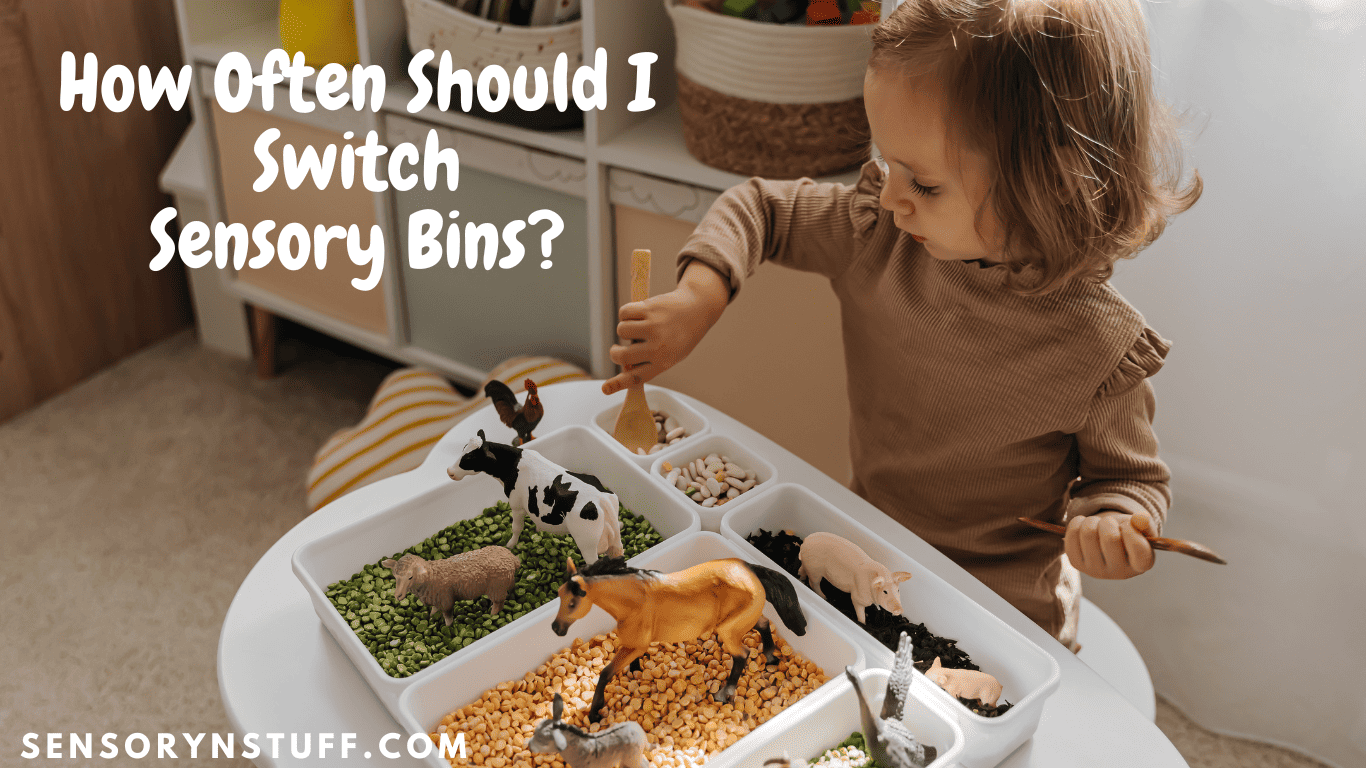
Best practices for keeping sensory play fresh and engaging for kids.
Writer: Kerri Rose
So, you’ve started using sensory bins. They can be an incredible engagement tool that teaches language, motor skills, imaginative play, and more. However, using the same bin over and over can be boring–especially for little ones with short attention spans. Variety is key when it comes to sensory play.
By rotating out sensory bins, you keep sensory play fresh and help with engagement. But what exactly is the best sensory bin schedule and how do you know it’s time to change or rotate your sensory bin?
Did you know there are ways to refresh a sensory bin without fully replacing it? In this blog we’ll discuss the signs that let you know it’s time to change your bin, a recommended rotation schedule, ways to refresh your bin, and how to keep sensory play exciting over time.
Signs It’s Time to Change a Sensory Bin
So, what are the telltale signs that it’s time to switch out your sensory bin? Well, you may start to notice your child is slowly losing interest in the new sensory play set you recently gave them. New things are exciting and engaging at first, but may start to taper off eventually, and it’s only natural.
There are some other signs that it might be time to change your sensory bin. When you’re looking at and cleaning of the materials in the bin, you might notice messy or worn-out materials. If any of the materials look dirty or have an off-smell, it’s time to clean or replace them.
Are you planning any educational activities, specific themes, or activities around your sensory play? You can change the contents of your sensory bin to align with whatever educational activities or learning curriculum you are currently studying. Is your child learning how to count? Consider adding numbers to your sensory bin. Are you studying outer space? Find a way to make outer space come to life with an engaging space sensory bin. Changes in the season and upcoming holidays also provide wonderful opportunities to rotate your old bins for fresh seasonal sensory bins.
Recommended Rotation Schedule
So, what does a good sensory bin rotation schedule consist of? It depends heavily on your child.
- For highly engaged children, consider weekly changes or refreshers.
- Younger kids or children with lower engagement levels would benefit from biweekly or monthly sensory bin rotations.
- The best sensory bin schedule can be created by watching for the signs mentioned above and gauging interest when adding new sensory play materials.
Here’s a suggested seasonal bin schedule to keep things fresh and exciting:
- January seasonal sensory bins might be filled with snowflakes, arctic animals or things that reflect the cold, winter season.
- February could incorporate Valentine’s Day.
- March and April would be perfect for spring bins. St. Patrick’s Day is in March. Easter and Earth Day are in April.
- May is also perfect to continue the spring theme and might include ladybugs or farm animals. June is the perfect month to start the summer-themed seasonal sensory bins.
- July seasonal sensory bins might include red, white, and blue patriotic themed for Independence Day. The summer themes can be continued throughout July and August as well. August might also include back to school themed material. September, October, and November can be fall/harvest themed. Halloween falls in October and Thanksgiving in November.
- A December seasonal sensory bin might contain green and red fillers and Christmas trees to reflect the holidays.
You can also include traditions and cultural things of importance to your family or personal milestones, including birthdays or special events.
Ways to Refresh a Sensory Bin Without Fully Replacing It

There are several ways to refresh a sensory bin without fully replacing them too! By swapping out just a few elements you can breathe new life into your sensory bin. Add new bin fillers, change the themed objects or small toys, or tools that complement the bin.
Try adding new colors, interactive pieces or even a new scent to rotate your sensory bin. Incorporating seasonal elements into a bin can also be fun. These small changes can keep your child interested and engaged for a longer period without having to buy totally new sensory bins.
Keeping Sensory Play Exciting Over Time
It’s important to keep sensory play exciting for your little one. Using a sensory bin rotation system and incorporating child-led choice helps to boost engagement. Rotate bins on a regular basis, either weekly, bi-weekly or monthly. Get in the habit or routine of doing this and set a schedule to align rotations with the different seasons, themes, or educational topics. Use labels on your containers to store different materials and accessories and keep them organized and readily accessible so they’re easy to find and rotate.
The biggest thing is let your child choose what interests them most by presenting several different options. Allow your child to help create and put together the sensory bin. They might even help you come up with new ideas. Pay careful attention to what your child is interested in and incorporate it into your sensory bins to boost engagement.
Of course, every child is different and it’s important to personalize your rotation schedules based on your child’s needs, interest, and preferences. By paying close attention to what your child is interested in, you’re sure to keep sensory play engaging and fresh for a long time to come!
Explore our variety of sensory bin kits and different materials to breathe new life into your sensory bin collection!